Why Requesto Is the Best API Client for Indie Devs
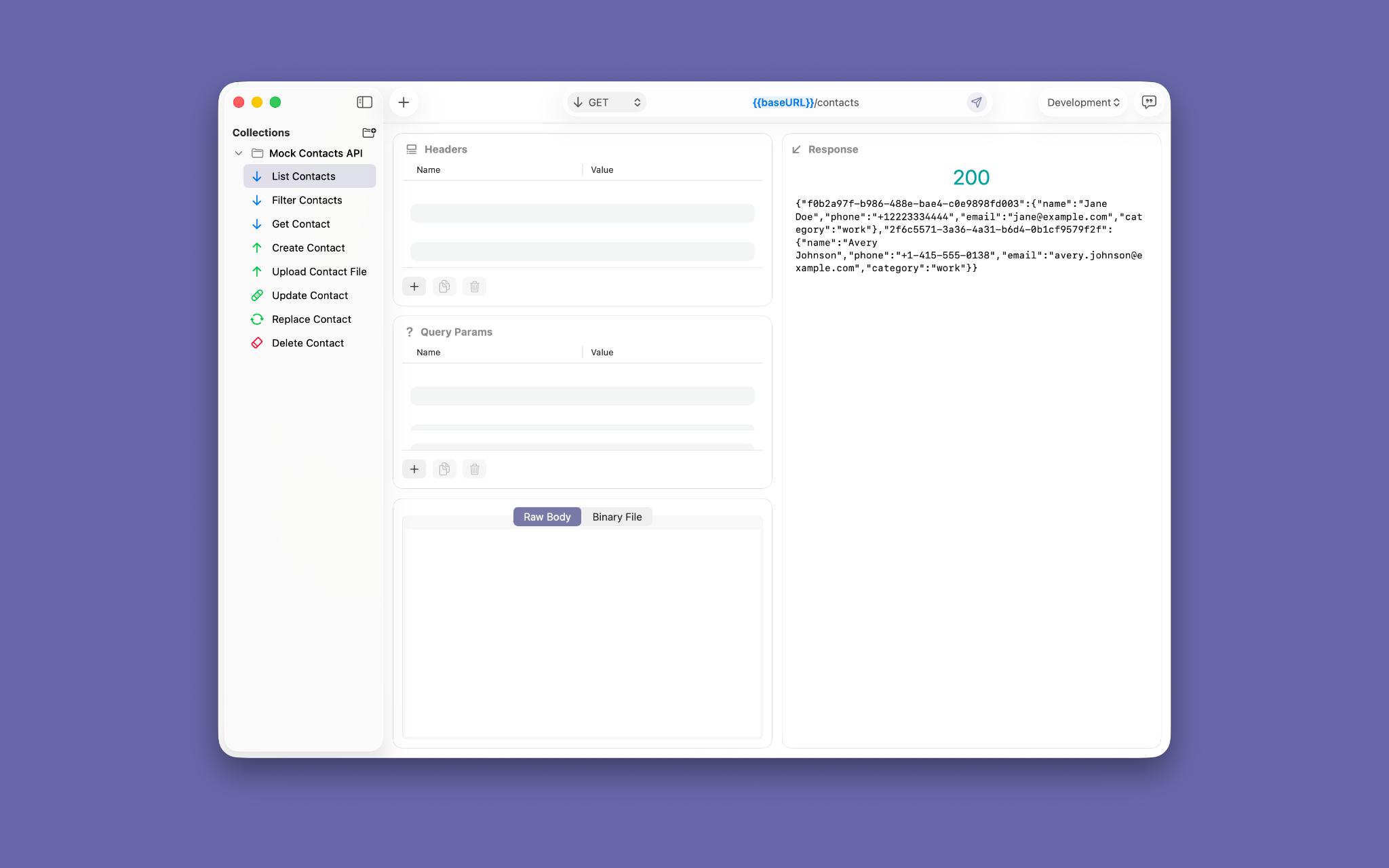
Indie developers usually do not need an API client built around procurement checklists, seat management, or sprawling collaboration layers. They need a tool that helps them send a request, inspect the response, change one detail, and keep moving while the problem is still fresh.
That difference in priorities is exactly why Requesto stands out. For solo builders and small product teams, the best API client is often the one that keeps the path short, the interface calm, and the feedback obvious.
Requesto is built around fast iteration during active product work and clear screens that do not waste attention. Instead of rewarding you for learning a maze of panels, it supports the kind of everyday debugging rhythm that indie developers rely on when they are shipping quickly.
Why Bigger Tools Can Feel Wrong for Smaller Teams
Many API clients are impressive in the abstract. They support team governance, deep workspace structures, role-heavy collaboration, and an endless list of add-ons. For large companies, those capabilities can be useful. For indie developers, they often become interface weight that appears long before the benefits do.
That weight shows up in small ways first. A simple request starts inside a crowded workspace. Basic edits compete with sharing controls, hidden menus, and project concepts that only make sense once a team has grown far beyond a few contributors.
This is where products like Postman or Insomnia can feel heavier than the job requires. They are not weak tools. They are broad tools. If you are a founder, freelancer, or tiny engineering team trying to validate a route, compare a payload, or reproduce a bug, feature abundance can turn into daily friction and workflow overhead can replace useful speed.
Indie development tends to be more direct than that. You are often switching between local services, staging environments, support incidents, and product changes without the safety of specialized roles around you. You do not need ceremony. You need a shorter path between problem and proof and a tool that stays readable under pressure.
Requesto fits that reality better because it does not ask you to buy into a larger operating model before it becomes helpful. You open it, shape the request, send it, inspect the result, and move on. That simplicity is not a stripped-down compromise. It is the point.
Requesto Matches the Way Indie Devs Actually Work
For indie developers, API testing is rarely a separate activity with a formal handoff. It happens in the middle of implementation, while you are checking a backend response, validating a third-party integration, or confirming that a fix really holds together across edge cases.
That means the quality of the tool depends on how quickly it supports the next action. Can you update the method without losing context? Can you adjust the URL and resend in seconds? Can you compare the response without mentally rebuilding the request first?
Requesto is strong here because it emphasizes a direct loop between edit and execution and a calmer desktop experience for repeated checks. The layout keeps the important controls close together, so your attention stays on the API behavior instead of drifting into UI management.
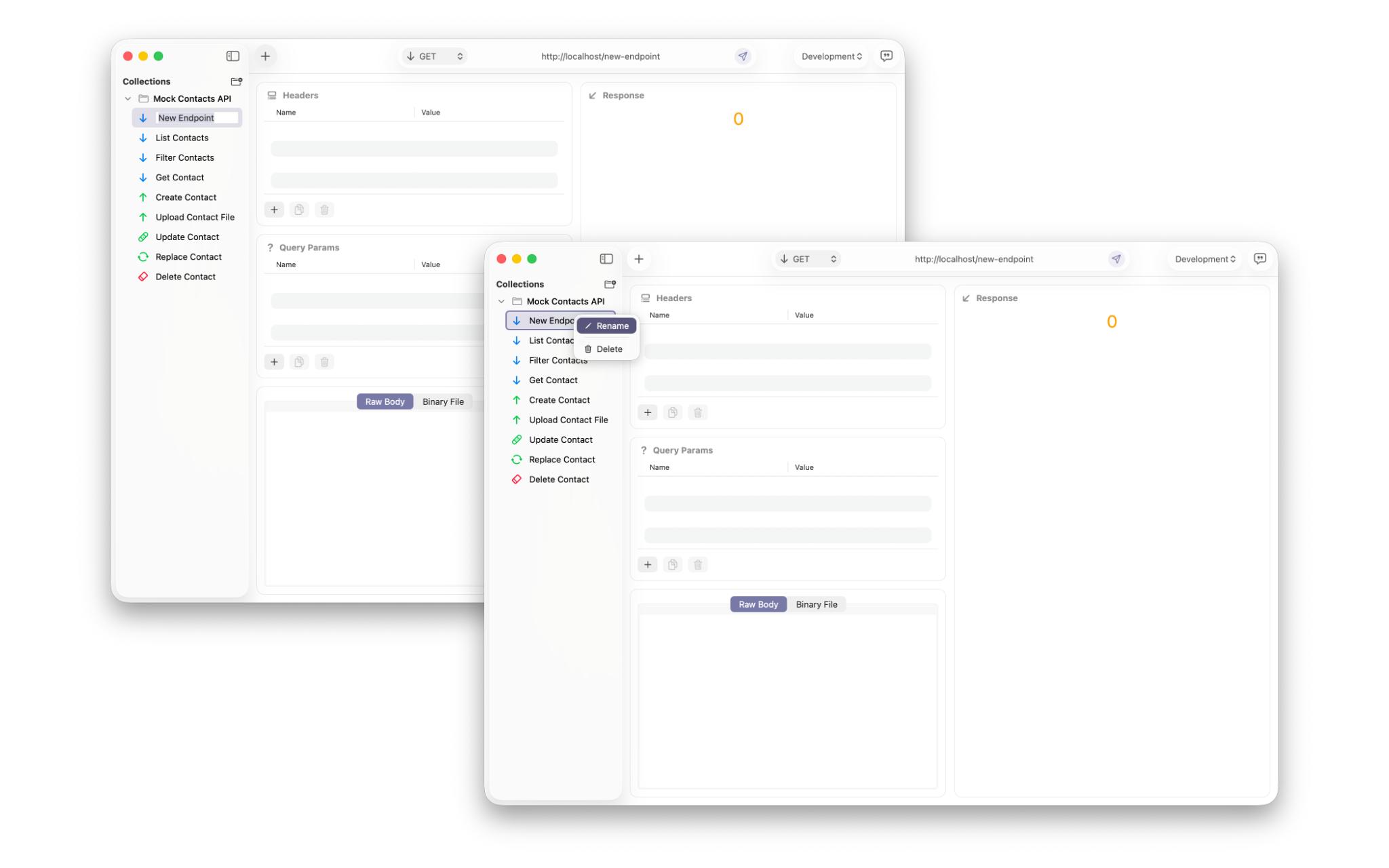
That starts with organization. When requests are easy to group and scan, you spend less time hunting for the version you meant to test. Collections and endpoints stay accessible without turning the app into a maze of nested structure.
It also shows up during edits. Changing a method, refining a path, or duplicating a request should feel mechanical in a good way. You should be able to make the change, confirm it visually, and move on. Requesto supports faster request adjustments during debugging cycles and more confidence in what changed before send.
This is one of the reasons Requesto feels unusually well suited to macOS users. It behaves like a focused desktop tool, not like a sprawling workspace product squeezed into a desktop window. For developers who care about pace and clarity, that difference compounds every day.
The Features That Matter Most Feel Better Here
Indie developers do not need fewer capabilities. They need the right capabilities to feel lighter in actual use. That usually comes down to the same handful of tasks repeated over and over: organizing endpoints, switching environments, adjusting request details, and inspecting responses quickly enough to act.
Requesto makes those tasks feel better because the core workflow stays coherent. Headers, parameters, and request details remain close to the main editor instead of getting buried behind too many layers. The result is less context switching during iterative API work and a more trustworthy view of request state.
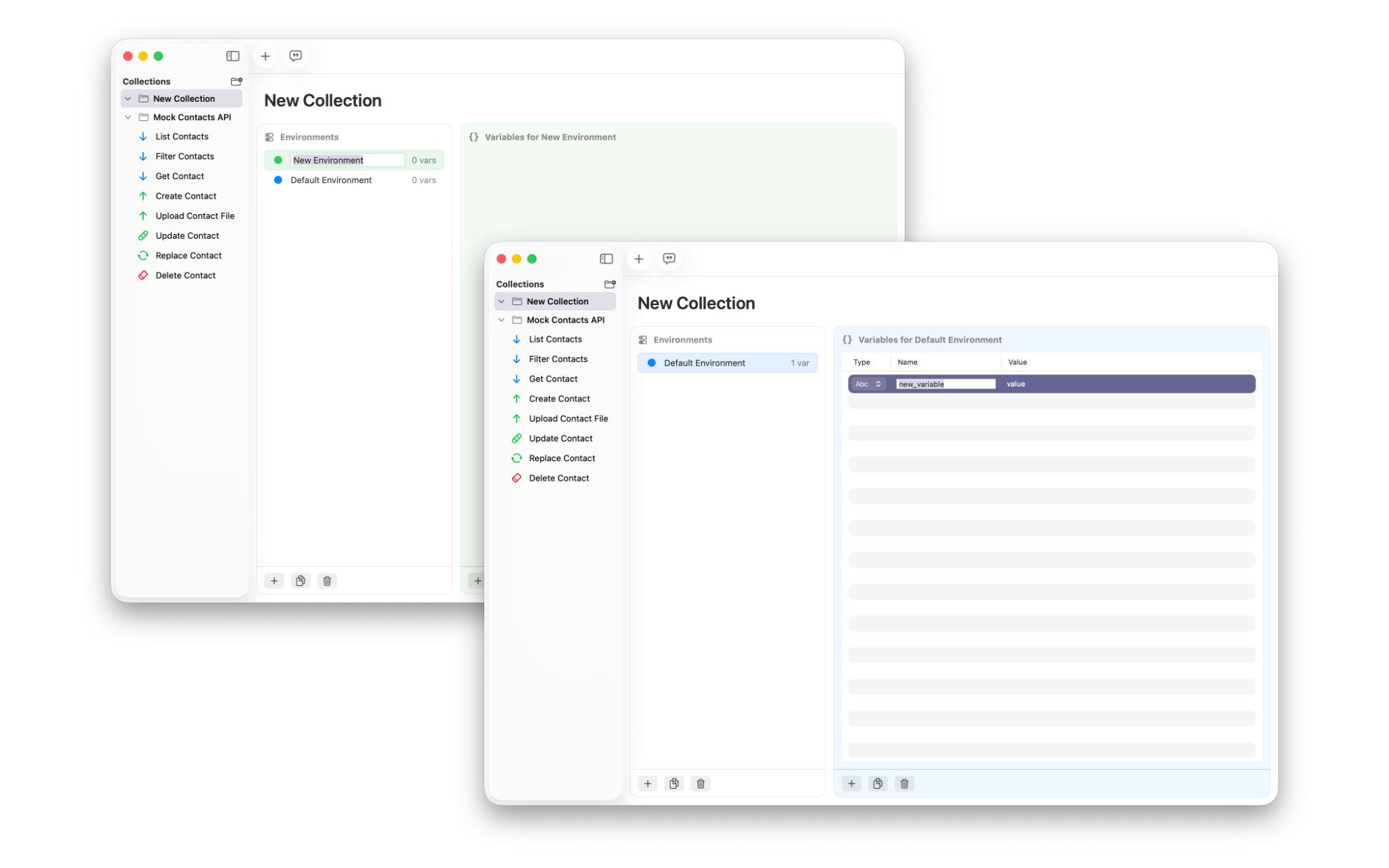
Variables and environments are a good example. They matter a lot for indie teams because one person may switch between local, staging, demo, and production-adjacent contexts in the same afternoon. If those values are awkward to define or easy to confuse, mistakes follow.
Requesto treats that workflow with practical restraint. You can define reusable values, keep naming under control, and move across environments without introducing a second layer of chaos. That supports cleaner transitions between deployment contexts and fewer avoidable mistakes in repeated tests.
The same logic applies to response inspection. A response viewer should help you answer the next question quickly: Did the body change? Is the status wrong? Is the field missing? If those answers are buried under visual noise, your testing loop slows down.
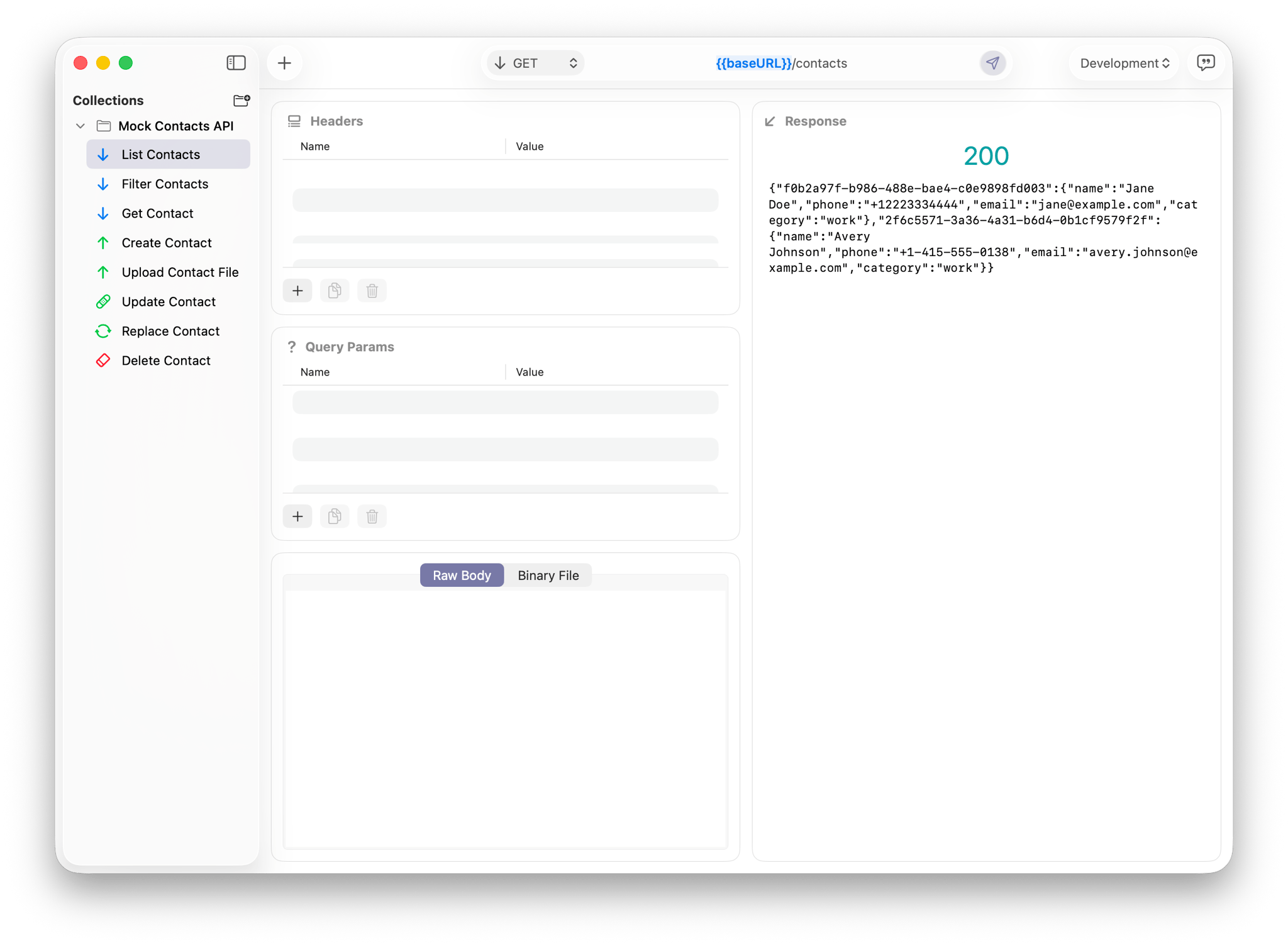
Requesto keeps response output readable enough to support real debugging, not just screenshots. That translates into quicker comparisons between request variants and faster decisions while issues are still in view. For indie developers handling backend work themselves, that is a serious advantage.
Why Requesto Wins for Indie Developers
Saying Requesto is the best API client for indie developers does not mean every other tool is bad. It means the tradeoffs are better aligned with what smaller teams usually need. If your daily work revolves around speed, clarity, and focused iteration, Requesto solves the right problem with the right amount of surface area.
Bruno may appeal to developers who want a Git-friendly workflow. Postman may appeal to teams that need a broad platform. Insomnia may suit users who want a different balance of extensibility and collaboration. But for many indie developers, those comparisons miss the real question: which tool is most pleasant and reliable to use several dozen times a day?
Requesto has a strong answer because it prioritizes everyday speed over enterprise theater and practical clarity over feature sprawl. It helps you stay in the loop of sending, checking, changing, and confirming without turning the interface into its own job.
That is why this is not just a claim about aesthetics. It is a claim about output. When a tool removes friction from routine request testing, you debug faster, verify fixes sooner, and spend more of your day shipping instead of wrestling with the client that was supposed to help.
If you want an API client that feels built for solo makers and lean product teams, Requesto is worth trying now. Download it from the Mac App Store with the button below and see how quickly a focused API workflow for indie builders and a faster path from request to confidence can improve your everyday development routine.