Why Requesto Is Easier to Use
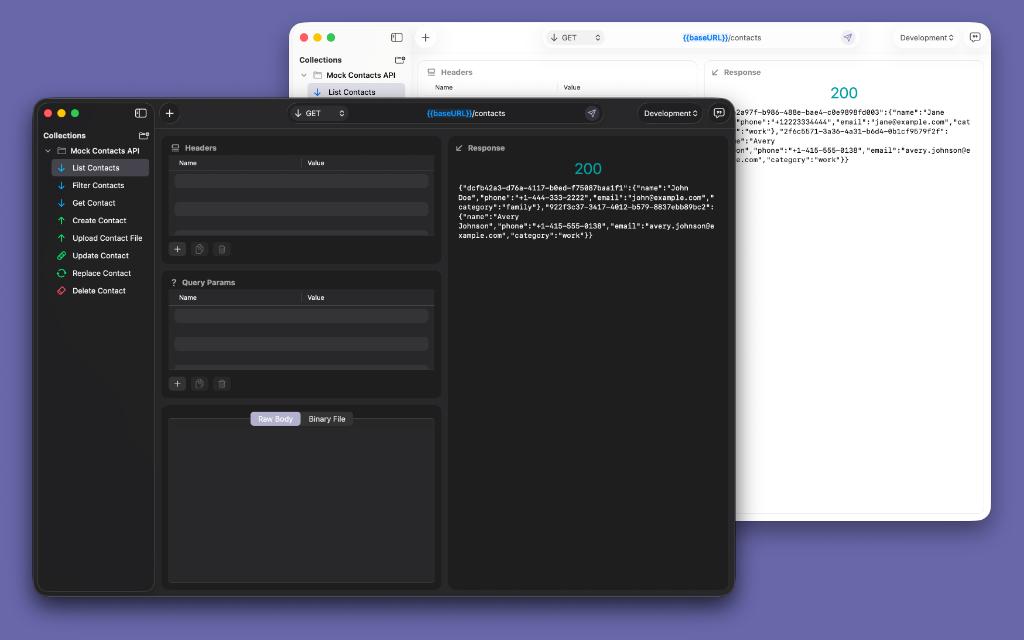
Most API tools can execute requests. The real difference appears in how much effort they demand before you can do something simple, like testing an endpoint, changing a method, or checking a response body under time pressure.
Many interfaces were built by adding layer after layer of functionality over years, and that history often shows up as dense panels, tiny controls, and workflows that reward memorization more than clarity.
Requesto takes a different approach. It is designed around fast decisions in active development sessions and clear screens that keep context visible.
Instead of forcing you to navigate around the interface to complete a basic task, it keeps common actions close, predictable, and easy to scan. That makes a big difference when you are iterating quickly, debugging an issue, or handing a project to someone new.
Simplicity That Speeds Up Real Work
In many API clients, creating a new endpoint can feel heavier than it should. You open nested menus, assign a location, set defaults, and then return to the editor to start the request. That overhead does not look dramatic in isolation, but it becomes expensive when repeated across a full day of testing.
Requesto focuses on a direct endpoint creation path and fewer steps between intent and execution. You create a request, define the essentials, and send it without crossing multiple interface layers.
This streamlined flow matters because API work is usually iterative. You do not build one request and stop. You build, run, adjust, compare, and run again.
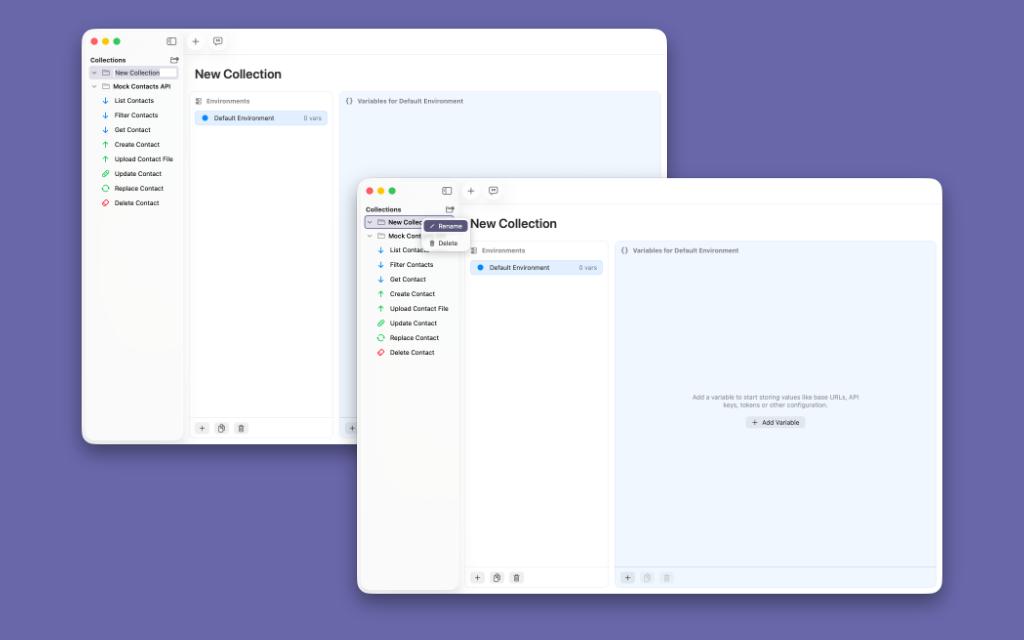
That loop needs rhythm. If the interface keeps interrupting you with avoidable setup steps, your focus drifts. If the interface keeps your path short and obvious, your focus stays on the API behavior itself. Requesto is built for the second outcome. You can add and organize endpoints quickly without fighting the tool.
This simplicity also helps teams. Experienced users move faster, and newer users need less guidance to be productive. A cleaner path means fewer internal walkthroughs, fewer “where do I click now?” moments, and less onboarding friction. Over time, that produces a more consistent team testing routine and faster handoffs between contributors.
Faster Method and URL Updates
Endpoint creation is only the beginning. Most of your time happens in edits: switching from GET to POST, adjusting a path segment, testing against staging and production hosts, or comparing query parameter variants. In cluttered tools, these edits often involve tiny hit targets, crowded controls, or context switches that break concentration.
Requesto keeps those updates straightforward. Method selection is immediately visible, URL editing is front and center, and related controls are positioned to support quick iteration rather than deep navigation. This design enables rapid request adjustment during debugging cycles and clean transitions between test scenarios.
When an issue appears in logs, speed matters. You might need to run five variants of the same request in a few minutes to isolate the problem. If each change costs attention, your analysis slows down. If each change is direct, your investigation stays sharp.
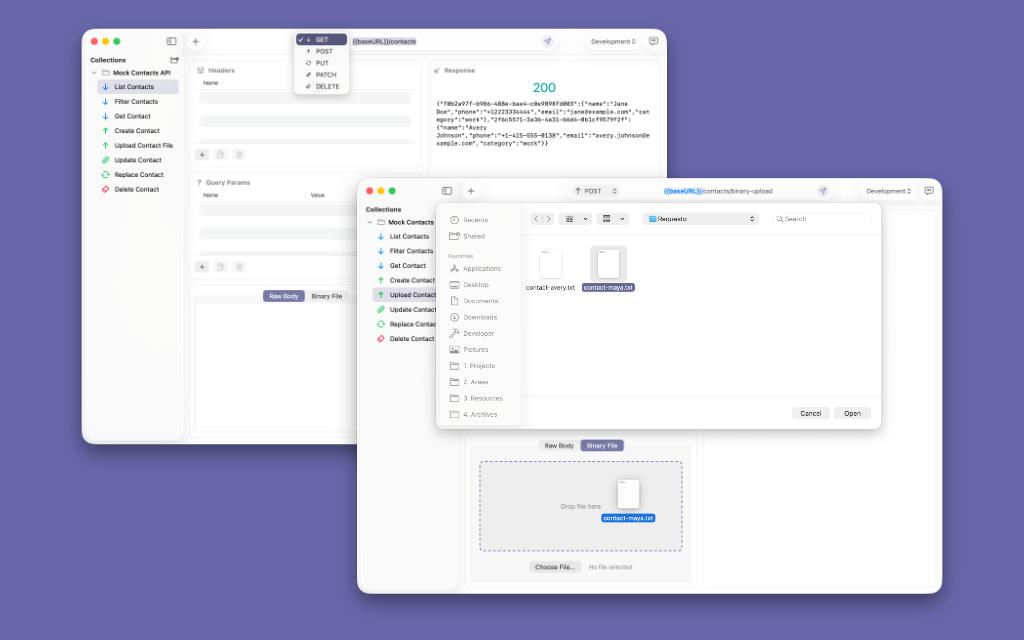
Requesto also reduces accidental mistakes during edits. Clear visual states and predictable controls make it easier to confirm what you changed before hitting send.
That is especially useful when you are juggling multiple endpoints that look similar but have different methods or routes. Better edit clarity leads to fewer avoidable request configuration errors and more confidence in each test run.
Another practical benefit is momentum. High-frequency edits should feel lightweight, almost mechanical, so your thinking stays on behavior and outcomes. Requesto supports that by removing the extra cognitive load that usually comes from crowded layouts and hidden controls.
Visual Clarity You Can Trust During Inspection
Sending a request is only half the job. You also need to inspect what came back, understand what changed, and decide what to do next. In overloaded tools, response panels compete for space with sidebars, controls, and metadata blocks. Important details get buried, and reading results becomes slower than it should be.
Requesto emphasizes a response area built for quick scanning and clear visual separation of key output details. Status, body, and related information are presented in a way that helps you orient immediately. You can review outcomes without digging through dense UI layers.
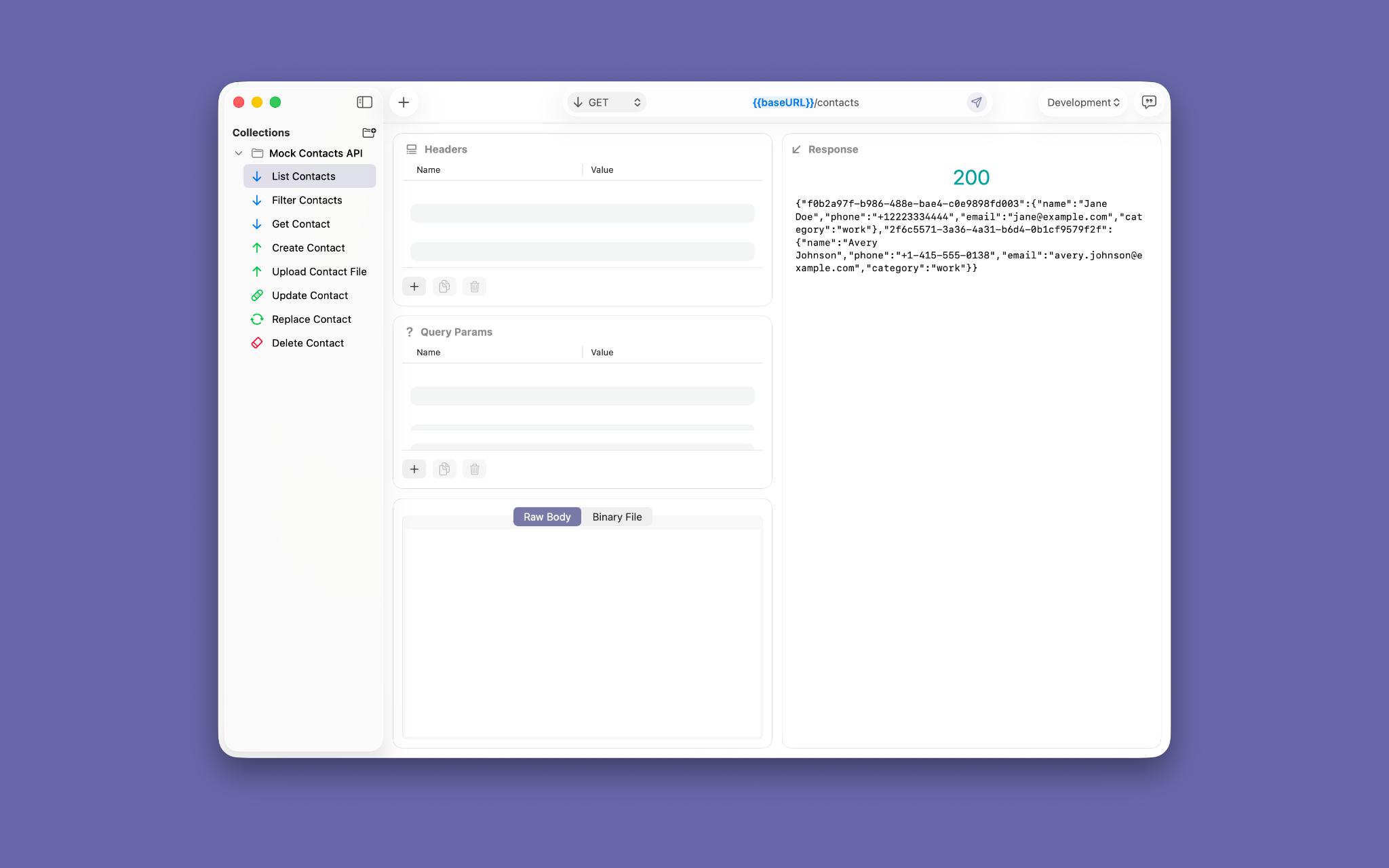
That clarity is not just a design preference. It has practical impact on debugging quality. When response data is easier to parse, you catch inconsistencies faster. You notice incorrect status codes, missing fields, or malformed payload structures earlier in the cycle. Fast detection leads to faster fixes.
Visual clarity also lowers fatigue during long sessions. Developers often run dozens of requests while troubleshooting one issue chain. A calmer interface reduces unnecessary strain and helps preserve attention over time. The result is more accurate response reviews under pressure and better decision speed during active troubleshooting.
For teams that collaborate across backend, frontend, and QA roles, this readability matters even more. Clear output is easier to discuss in real time, easier to screenshot for context, and easier to use when documenting an issue report. It improves communication while keeping everyone focused on the same evidence.
Why Everyday Experience Matters More Than Feature Lists
That focus on clarity changes how you evaluate API tools. Many platforms compete on feature count, but most teams lose time in routine execution, not from lacking edge-case capability. The more useful productivity question is: how fast can someone move from “I need to test this” to “I trust this result”?
Requesto is built around time-to-confidence in routine API work and interaction quality that holds up under pressure.
That means less navigation cost, fewer attention breaks, and clearer output when stakes are high. Instead of optimizing for the longest possible feature list, it optimizes for how reliably developers can run, adjust, verify, and move forward.
The business impact is cumulative. When routine tasks are easier to complete correctly, teams recover engineering time, reduce avoidable rework, and shorten feedback loops across development and QA.
That is what “easier to use” should mean in practice: lower effort, faster verification, and better decisions because your focus stays on API behavior rather than UI mechanics.
Clarity Over Noise
Requesto is not trying to win by being louder. It is trying to win by being clearer. For teams and individuals who spend serious time testing and validating APIs, that clarity is the difference between constant UI friction and a workflow that simply stays out of the way.
That is also why this positioning focuses on the everyday developer experience instead of abstract promises. Simplicity, speed, and visual clarity are not marketing extras. They are operational advantages that compound with every request you send, every issue you triage, and every release you prepare.
Try Requesto
If you want a cleaner, faster API workflow, give Requesto a try and see how quickly it fits into your daily testing routine.